

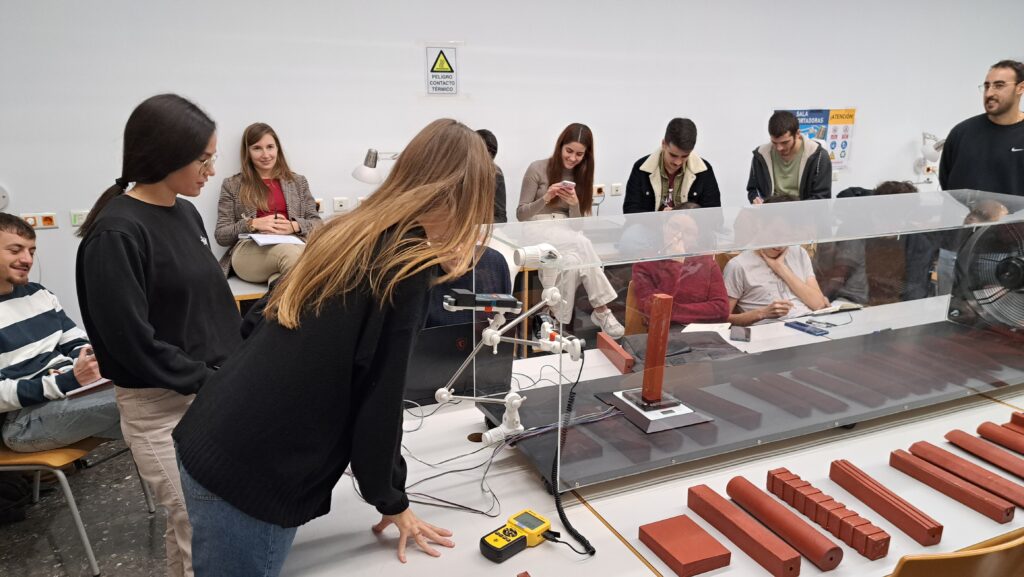
teaching laboratories
For the development of the practical sessions of the subjects taught, the department has the following facilities:
-> T.U. industrial
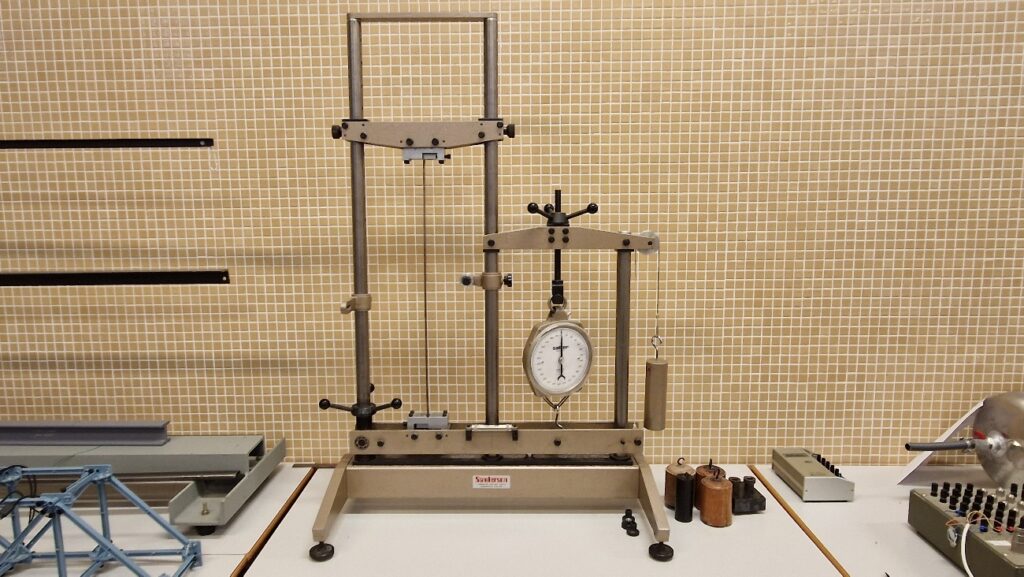
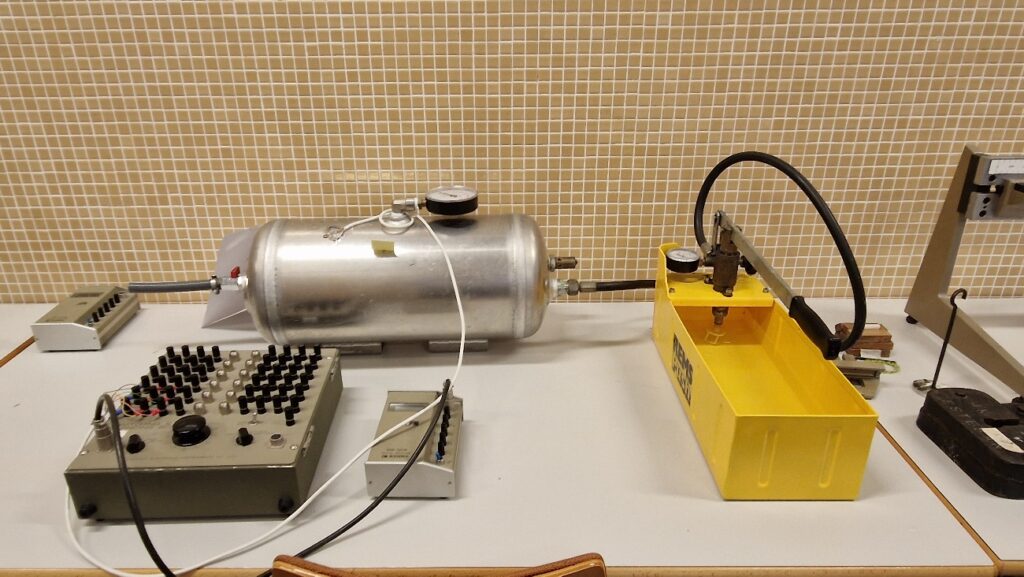
Resistance and elasticity laboratories of materials
Location: Heavy ship 5g. (V.5G.1.016 and V.5G.1.016)
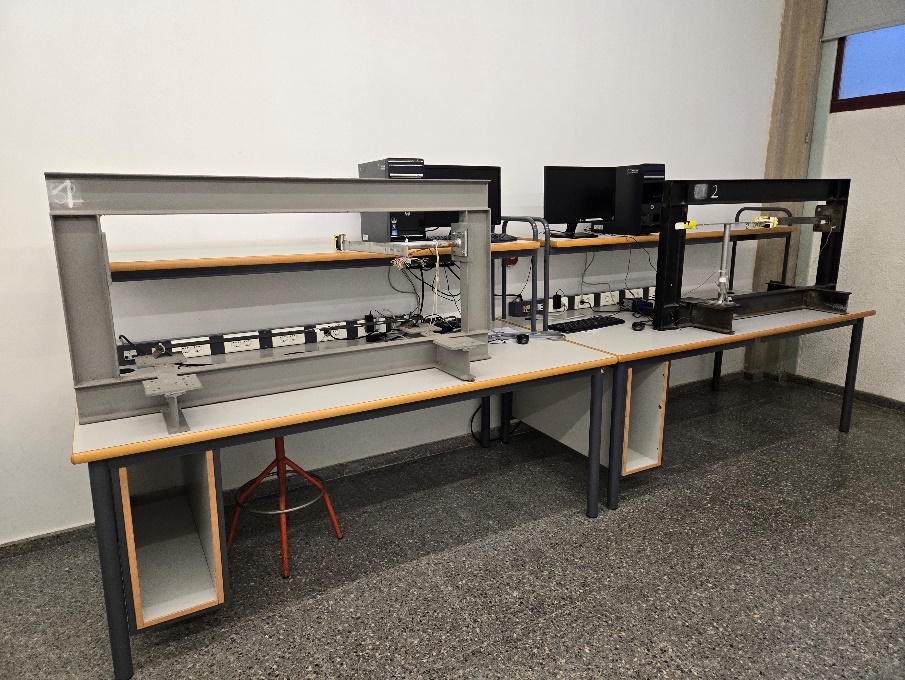
In these laboratories, experimental montages adapted for use in training activities are available. These mounts are oriented to the compression of basic concepts of elasticity and resistance of materials using different extensometry equipment.
These spaces are for restricted use for the scheduled practical sessions of the subjects taught.
SUBJECTS:
- Elasticity and resistance of materials, Code: 11412. (GITI)
- Elasticity and Strength of Materials, Code 11482. (GIOI)
- Elasticity and Strength of Materials, Code 11482. (GIOI)
- Elasticity and Strength of Materials, Code 12938. (GIE)
- Machinery Basics and Material Strength, Code 12274 (GIQ)
- Structures, code11426.
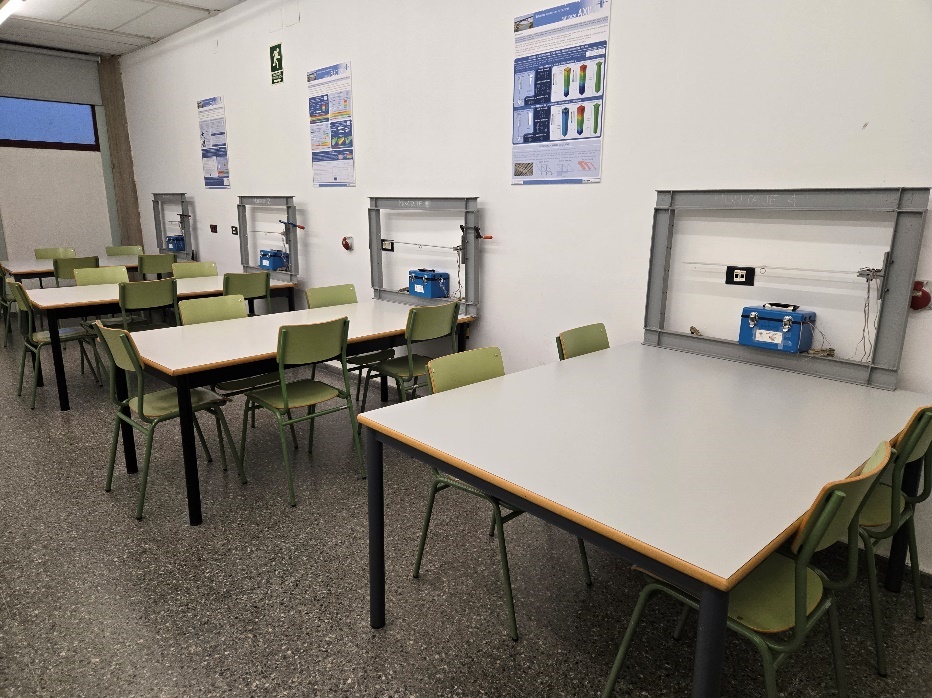
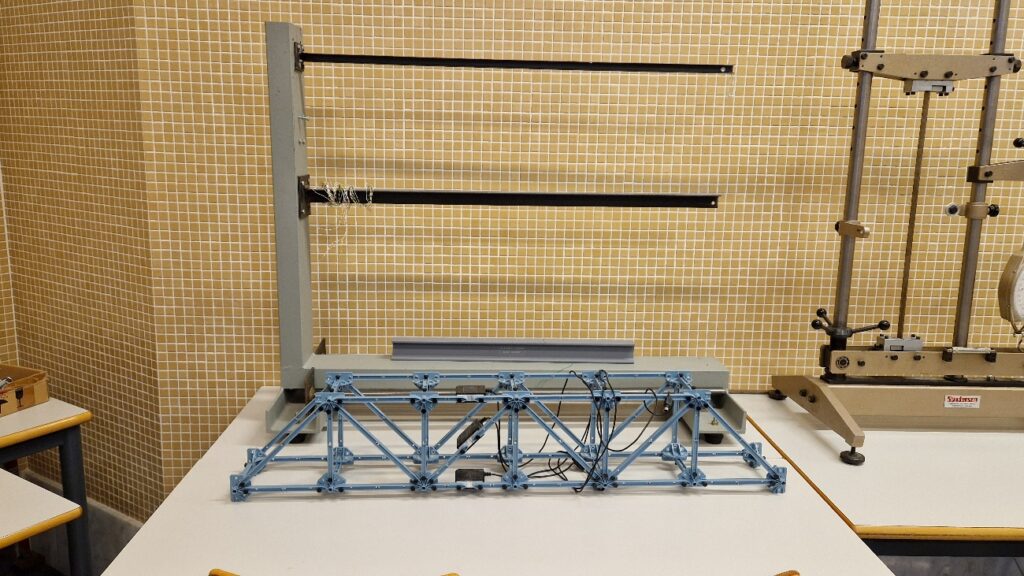
Structures Laboratory
Location: Heavy ship 5g. (v5g.1.025)
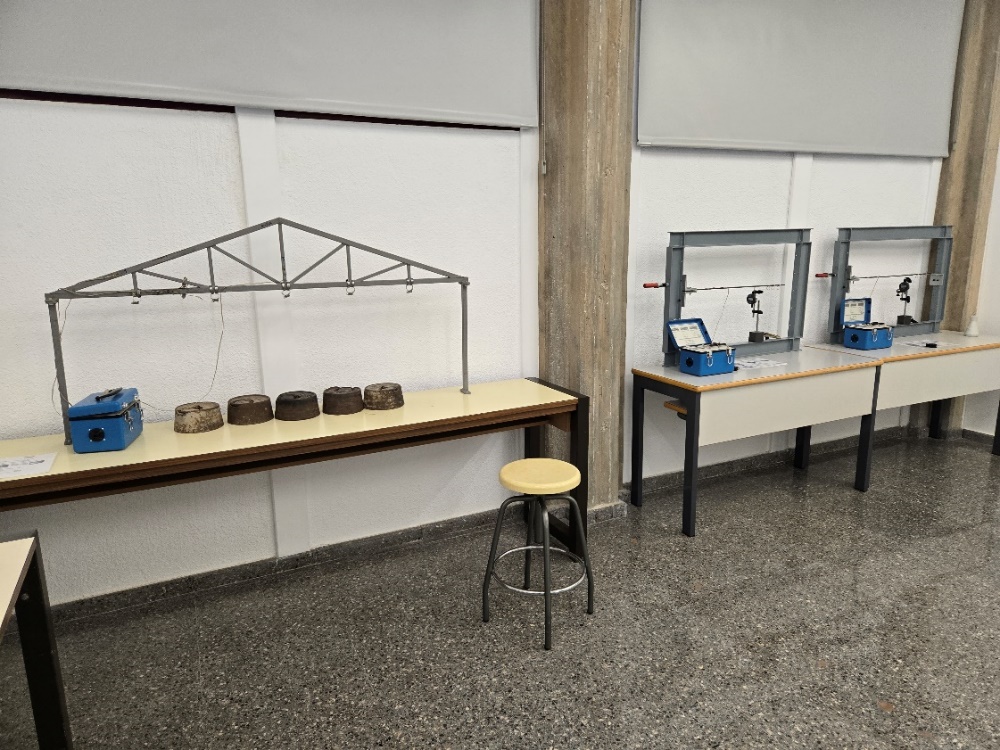
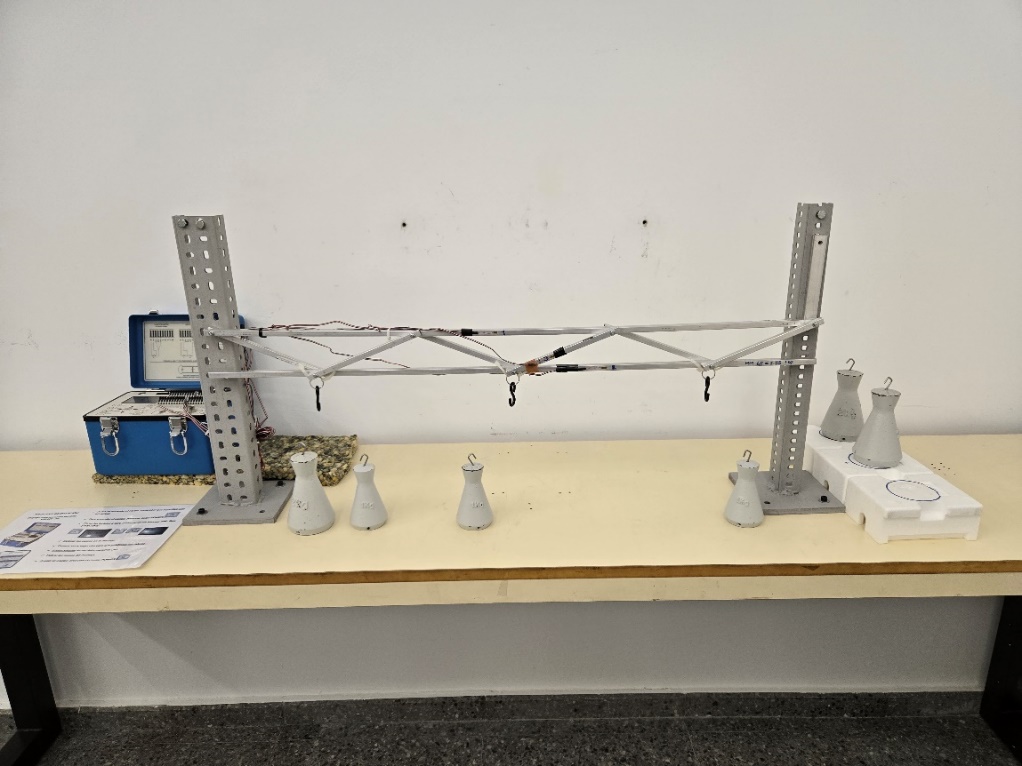
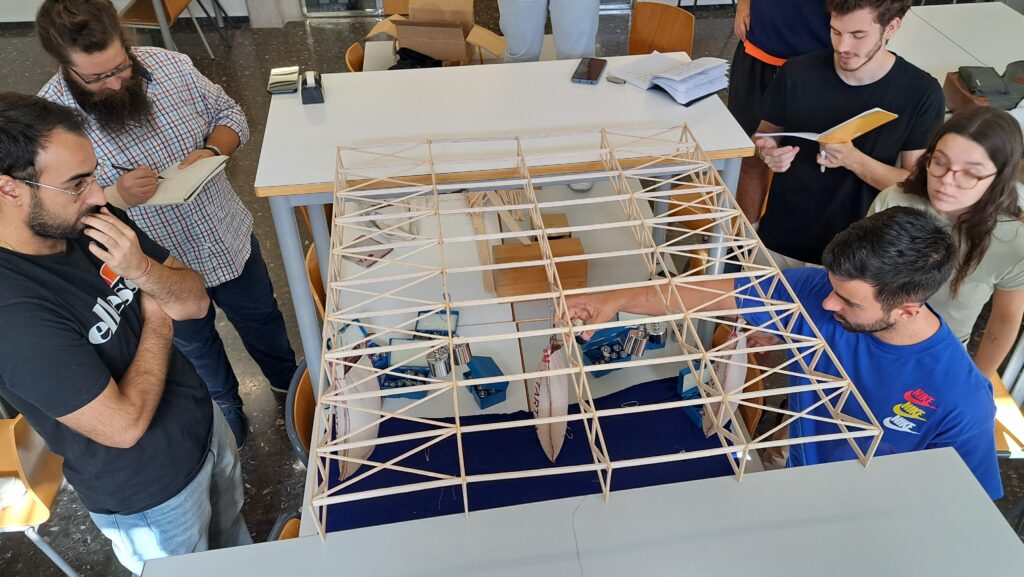
In this laboratory, structural models at scale and extensometry didactic equipment coexist in order to assimilate the theoretical concepts studied in the classroom. In addition, these assemblies allow the student to be brought to the professional practice of engineering, comparing and evaluating theoretical values with the experimental values.
This laboratory is for restricted use for the scheduled practical sessions of the subjects taught.
SUBJECTS:
- Structures, code11426. (GITI)
- Structures for leveling, code 33666 (Master)
-> T.U. Alcoy
Resistance Laboratory of materials and structures
Location: C1L6 Laboratory (Carbonell Building – A.1C.1.065)
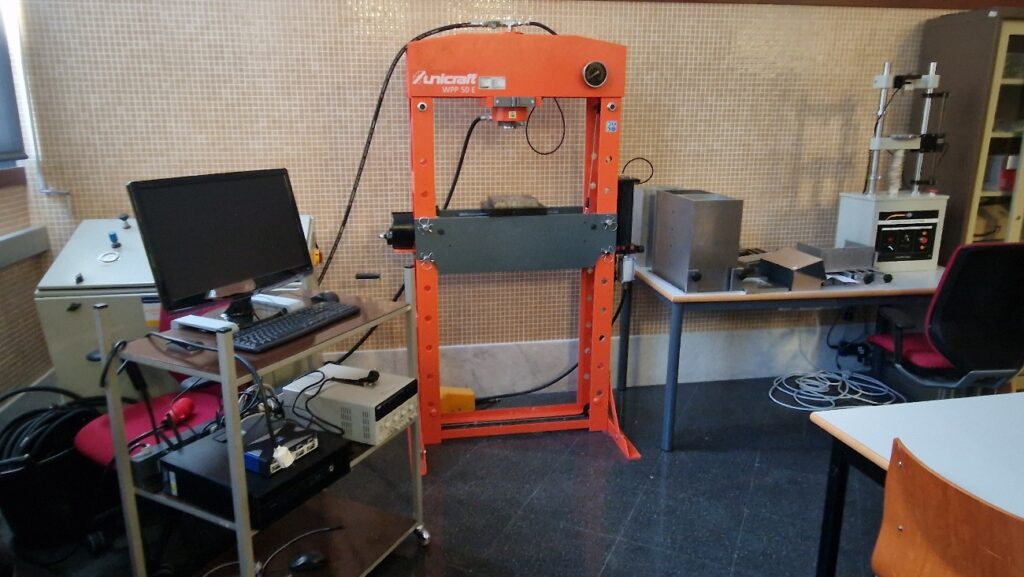
The Materials and Structures Strength Laboratory has specialized equipment for testing on a wide variety of materials, mainly steels, wood and composite materials. These tests make it possible to determine fundamental parameters such as resistance, rigidity and ductility, with the purpose of contrasting the experimental results with the theoretical foundations addressed in the master classes.
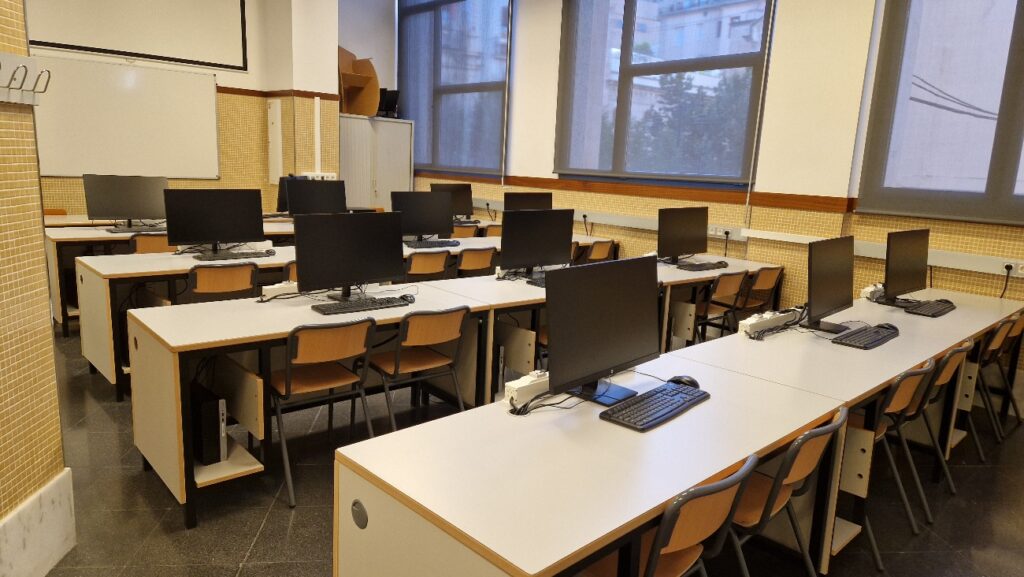
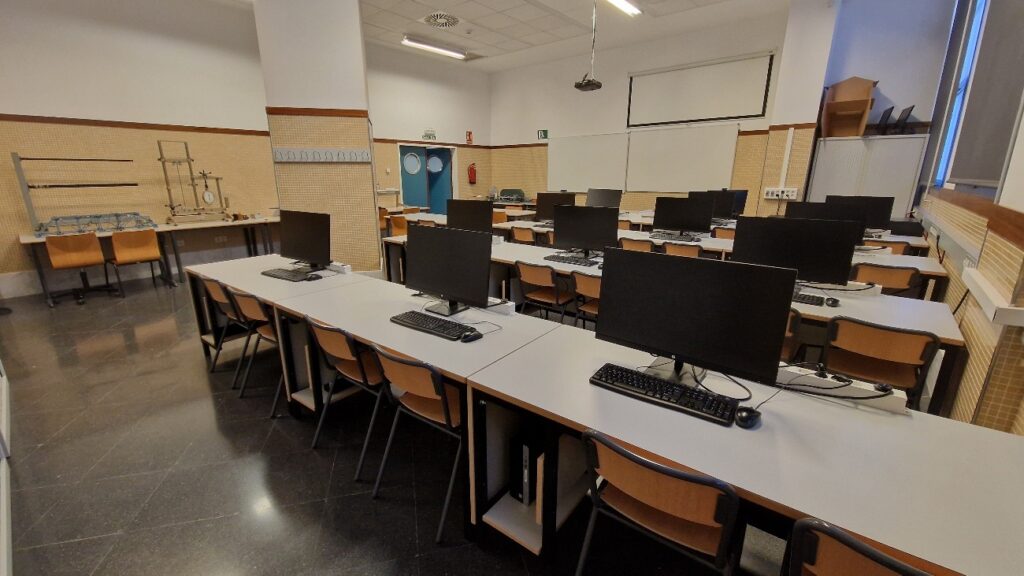
Likewise, the laboratory has computer equipment equipped with numerical analysis software and structural simulation. These digital tools enable the modeling and virtual reproduction of the tests previously carried out, favoring the comparison between theoretical, experimental and computational results. In this way, a deeper and more critical understanding of the mechanical behavior of materials and the structural response to different load states is enhanced..
These spaces are for restricted use for the scheduled practical sessions of the subjects taught.
SUBJECTS:
- Elasticity and Strength of Materials I, Code: 12645 (GIM).
- Elasticity and Strength of Materials II, Code: 12663 (GIM).
- Industrial Structures I, Code: 12684 (GIM).
- Structures and industrial constructions, Code: 12662 (GIM).
- Material Strength (IT2), Code: 12075 (GIE).
- Design of Structural Systems, Code: 12920 (GIDIDP).
- Material Strength, Code: 10342 (GIDIDP).
- Machinery Basics and Material Strength, Code: 12345 (GIQ).
- Vibrations and Acoustics, Code: 32927 (Material Masters).
Research Laboratory
For the development of the different lines of research of the department, the following facilities are available:
Mechanical Testing Laboratory
Location: Heavy ship 5g. (v.5g.0.011)
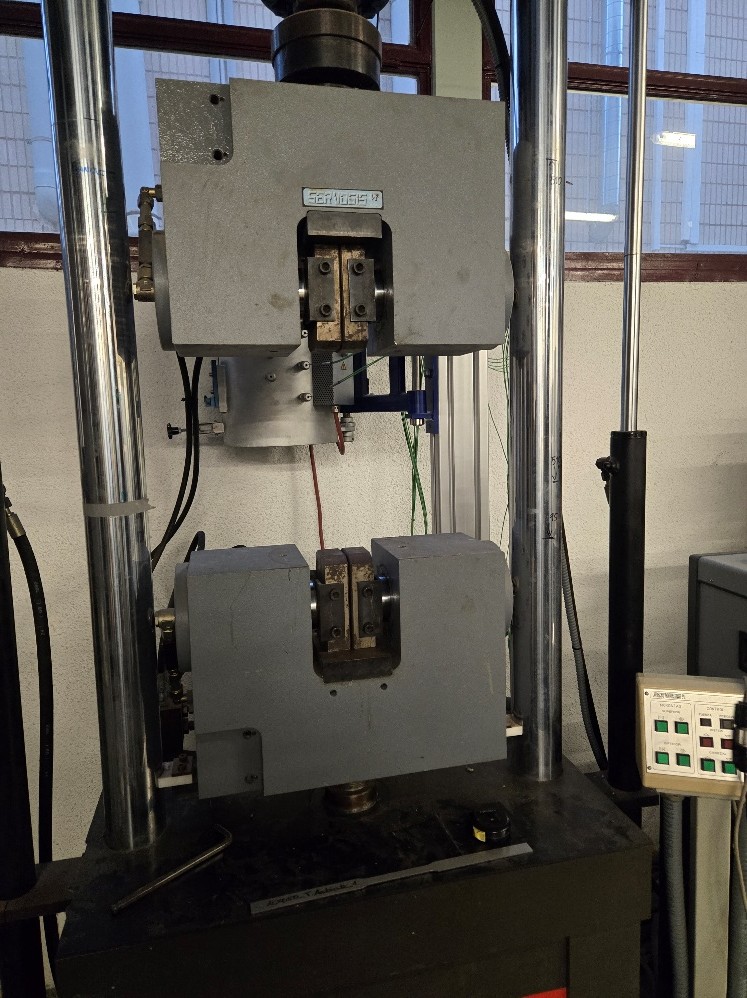
In this laboratory, dedicated exclusively to research, it has universal test machines available for traction, compression and bending tests at different loads..
These machines are computer-controlled through software ad-hoc To carry out standardized tests, in accordance with the standards ruled by the different UNE-ISO standards.
Research Laboratory EPS Alcoy
Location: F3S1 Laboratory. (Ferrandiz Building – A.1B.3.014)
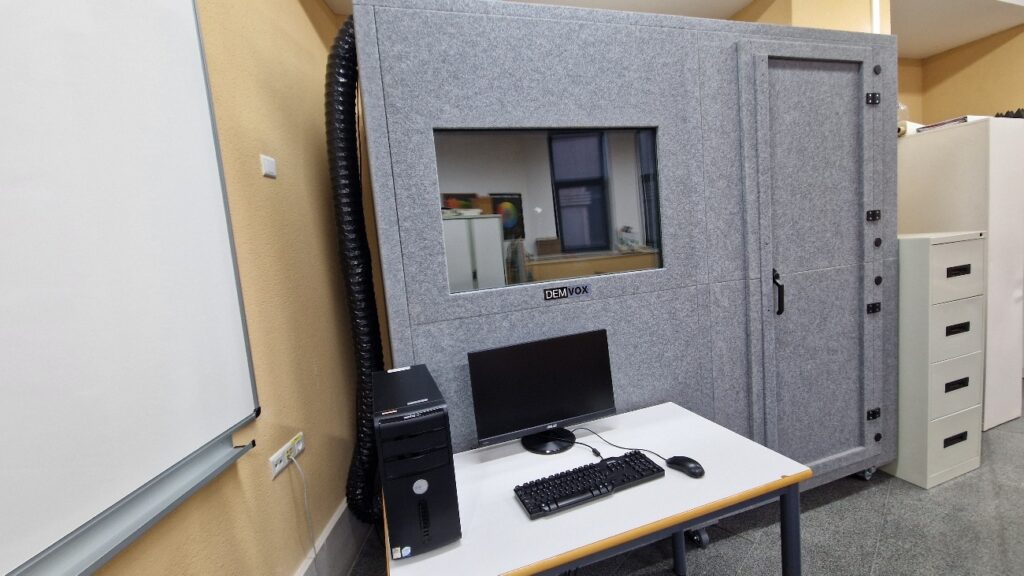

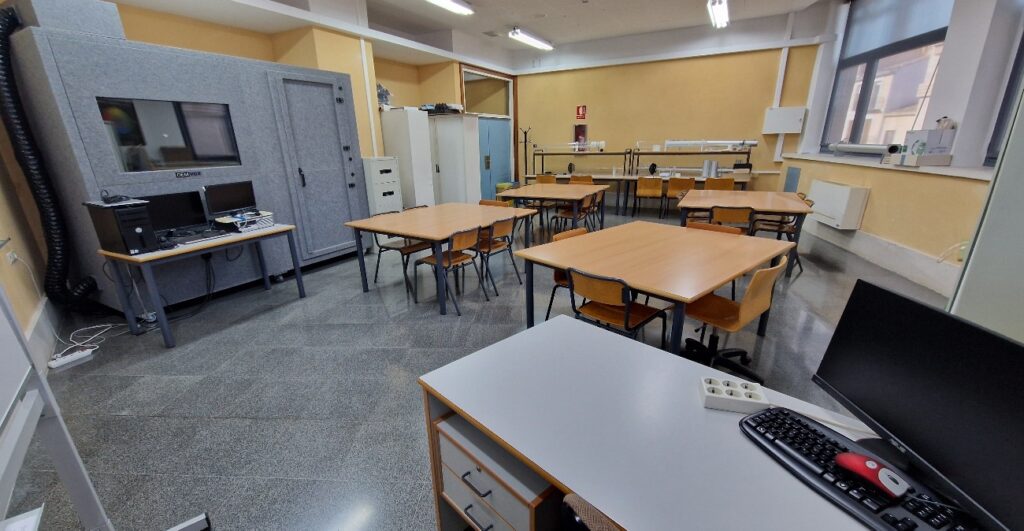
In this laboratory, acoustic tests are carried out aimed at the analysis and characterization of composite materials developed within the framework of research projects. These experimental activities allow to determine essential acoustic properties, such as sound absorption, transmission and acoustic insulation, with the purpose of optimizing the performance of materials in specific technological and structural applications..
The laboratory also plays a relevant teaching role in the subject taught within the Master’s Degree in Science and Engineering of Materials, where students apply the theoretical knowledge acquired by carrying out practical essays. This contributes to strengthening the integration between research and advanced academic training, encouraging a deep understanding of the acoustic phenomena and the techniques used for their analysis and evaluation..
SUBJECTS:
- Vibrations and Acoustics, Code: 32927 (materials master).
Department of Continuum Mechanics and Theory of Structures

© 2026 | Universitat Politècnica de València